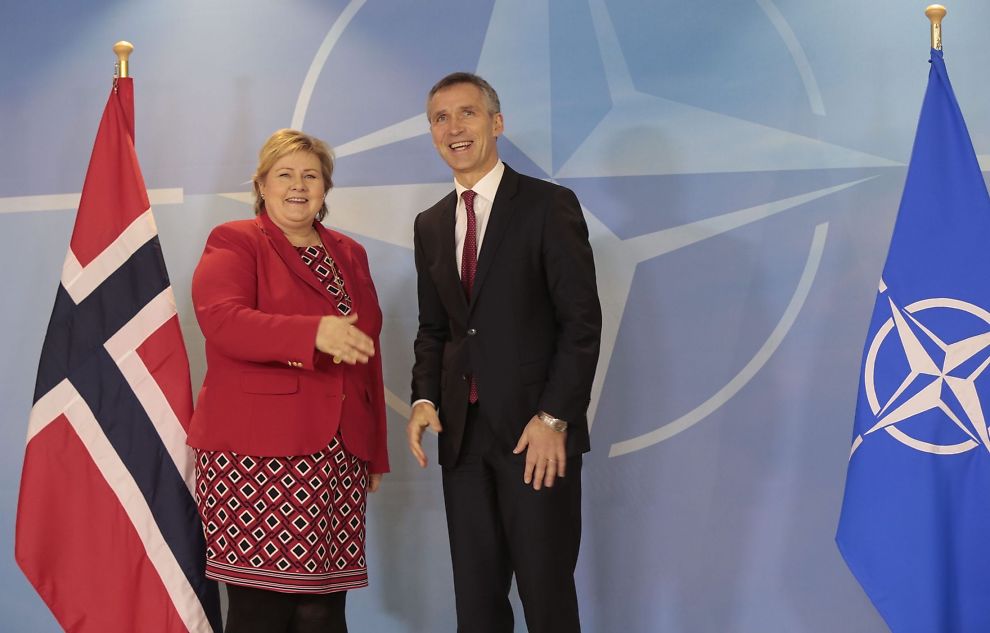
Ifølge FFI må Norge bruke 17 milliarder kroner mer i året på forsvar for å nå NATOs to-prosent mål. Torsdag kommer NATO-sjef Jens Stoltenberg på besøk til hjemlandet.
NATOs generalsekretær kommer til Norge en krystallklar melding om at Norge må trappe opp forsvarsbudsjettet, og at målet om to prosent av BNP, brutto nasjonalprodukt til forsvar, også gjelder hjemlandet.
Russophobia Used to Justify Increased Military Spending – Norwegian Media
Russophobia is flourishing in Western countries; it is an inherent feature of their policies, serving as a pretext to justify increased military spending to counter an imaginary Russian threat, a daily Norwegian newspaper said, stressing that Moscow poses no danger to the West.
Although Russia poses no threat to any Western country, including Norway, Russophobia is inherent in Western politics. It dates back to the times of King Oscar I who ruled Sweden and Norway in the 19th century according to the newspaper. He wanted Sweden and Norway to take part in the Crimean War alongside the United Kingdom and France.
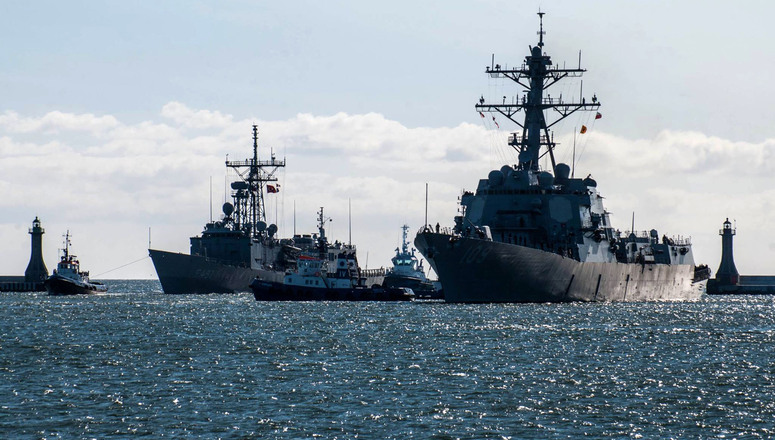
NATO Allies begin naval exercise BALTOPS in the Baltic Sea
Scores of ships and aircraft from 17 countries are taking part in Baltic Sea naval drills
as part of exercise BALTOPS which starts on Friday (5 June 2015) and runs until 20 June. Allied participation demonstrates NATO's resolve to defend the Baltic region, and will hone the ability of Allies and partners to work together.
NATO begins a large naval exercise in the Baltic Sea Friday. Pictured: Latvia's Defense Chief Raimonds Graube (left) shakes hands with a Canadian paratrooper during the military exercise "Saber Strike" in Adazi, June 12, 2014. Reuters
The NATO alliance held joint military exercises Monday in Poland, Lithuania, Estonia and Latvia amid escalating tensions between eastern European nations and Russia. NATO has stepped up the size and training of its forces in recent months in response to a marked uptick in Russian military activity, including Moscow’s purported involvement in the eastern Ukraine conflict.
Dubbed “Saber Strike 2015,” the annual NATO exercises will involve 13 member nations and more than 6,000 soldiers, Agence France-Presse reported. United States military personnel will spearhead the drills, which were slated to continue through June 19.
NATO Begins Huge Sea and Air Campaign in Baltic Region
NATO has begun a huge air and sea operation in the Baltic region involving over 5,000 troops and scores of ships and aircraft, despite declaring the Baltic States to be under no threat from Russia.
NATO Secretary General Jens Stoltenberg said on Thursday that the alliance sees no immediate threat from Russia to its Baltic member states, despite NATO itself ramping up military forces in the region.
VILNIUS: US-led NATO drills began Monday in the Baltic states and Poland, a move intended to reassure Russia's nervous neighbours amid tensions over Ukraine.
Russia's increased military presence in the Baltic Sea and regional airspace since its annexation of Crimea from Ukraine last year has jangled nerves in the area, which lay behind the Iron Curtain 25 years ago.
NATO Holds Military Exercises In Baltic States Amid Increased Russian Activity
"The huge allied presence demonstrates solidarity with the countries of this region," he said, adding that Lithuania is hosting the command centre for the drills.
NATO has been guarding the skies over the three small Baltic states since 2004, when they joined the defence alliance but lacked the air power to monitor their own airspace.
Last month, the Baltic trio formally asked NATO to permanently deploy several thousand troops in their region as ..
NATO is considering a request by the three Baltic states, Estonia, Latvia and Lithuania, who want thousands of troops to be deployed to protect against a possible Russian invasion.
The move would violate a NATO pact with Russia that the alliance would never put permanent bases in former Soviet countries. But as Al Jazeera's Laurence Lee reports from the Baltics, countries such as Lithuania are worried about Russian aggression.
Putin Calls Fears of Russian Attack on NATO 'Insane'
The relationship between Russia and the West should be based on cooperation, rather than confrontation, Russian President Vladimir Putin said, stressing that only a mad person could picture the possibility of a war between Russia and NATO.
MOSCOW (Sputnik) – Only a mad person experiencing nightmares could picture the possibility of a war between Russia and NATO, Russian President Vladimir Putin said.
"I would like to say that it is not that we feel deceived or treated unfairly. This is not the point. The point is that relationships should be built on a long term basis not in the atmosphere of confrontation, but in the spirit of cooperation," Putin said in an interview with Italian newspaper Il Corriere della Sera ahead of his visit to Milan.
- Det er ikke noe våpenkappløp, sier forsvarsminister Ine Eriksen Søreide når Norge og NATO tester en ny hurtigstyrke i Russlands nabolag.
Over 2.100 soldater fra ni land har nå inntatt Zagan i Vest-Polen. Med norske, tyske og nederlandske soldater i ledelsen tester de NATOs nye «spydspiss», hurtigstyrken som skal ha de første soldatene av gårde på to døgn om det smeller.
- Det er helt nødvendig å gjøre dette grepet. Det har vært savnet i NATO lenge, sier Ine Eriksen Søreide (H) om et «åpenbart» behov for å kunne rykke ut raskere.
Torsdag besøker både Søreide og NATO-sjef Jens Stoltenberg øvelsen Nobel Jump i Polen, der over 200 soldater fra Telemark bataljon nå er i full sving. Beredskap
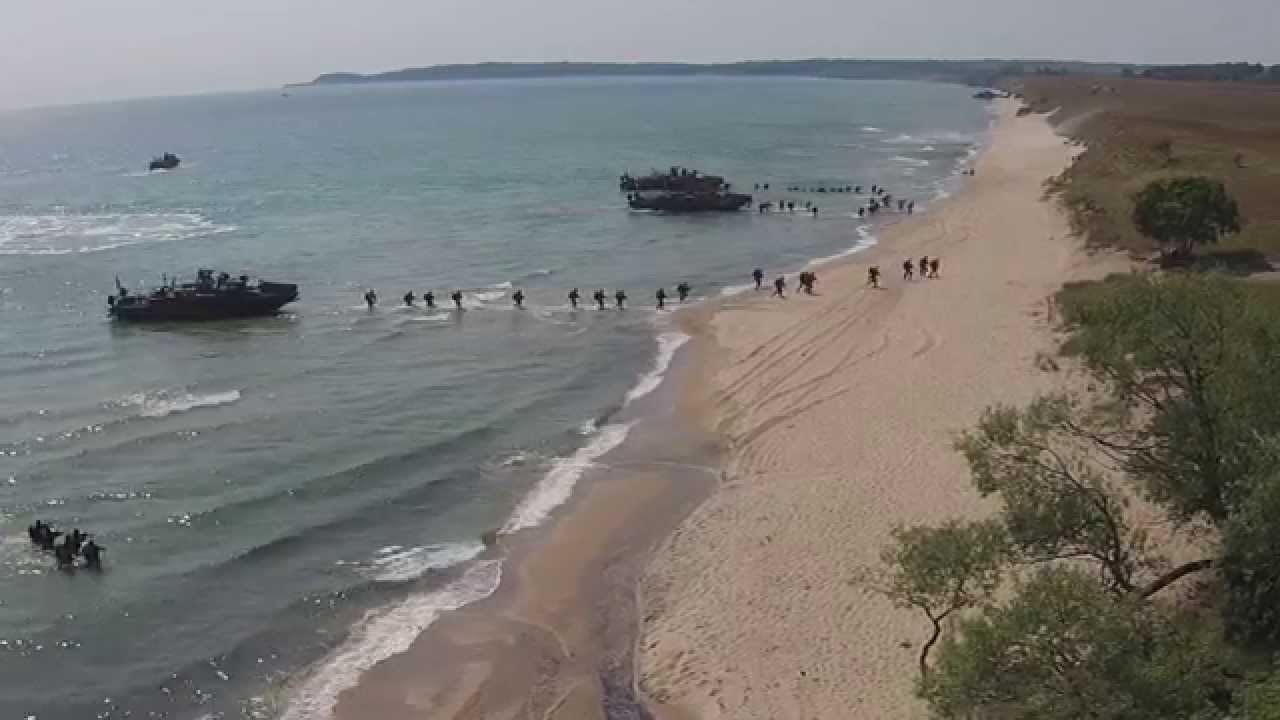
Crew Saved When Polish Amphibian Sinks During NATO Exercise
USTKA, Poland
A Polish military spokesman says a Polish amphibian transporter sank after a NATO landing exercise in the Baltic Sea but both crew members have been rescued safely. The amphibian sank Wednesday 150 meters (yards) off the beach in Ustka, in northern Poland, as it was returning to its transport ship.
Nato's Dynamic Mongoose anti-submarines take part in an exercise Photo: Marit Hommedal/AFP
Michael Fallon in warning to Vladimir Putin as he visits military exercise on Russia’s doorstep
Defence Secretary says 17-country manoeuvres 'not a game' and are warning that Russian president will not undermine UK’s resolve to back Nato allies
Nato will not be intimidated by Vladimir Putin's nuclear sabre rattling, the Defence Secretary has said, as he visited a major amphibious assault exercise on Russia’s doorstep.
Michael Fallon said the 17-country manoeuvres on the Baltic coast were “not a game” and were a warning that the Russian president could not undermine Britain’s resolve to back its Nato allies.
He spoke after Mr Putin announced Russia would this year extend its nuclear arsenal with 40 new intercontinental ballistic missiles.
Stoltenberg og Breedlove kaller Russland for en fare mot NATO i øst
NATOs generalsekretær Jens Stoltenberg og sjef for NATOs styrker i Europa Philip Breedlove har i sin artikkel offentliggjort i The Wall Street Journal betegnet Russland og Den islamske staten som farer alliansen må stå mot.
"Mot sør fra oss sår IS og andre ekstremistrgupper kaos og inspirerer sine tilhengere til å utføre terrorangrep i et område fra Paris til Texas. Mot øst påtvinger Russland naboer sin vilje uten å ense deres suverenitet." — skriver de. Etter deres skjønn begrunner disse truslene alliansens tallrike øvelser i Europa fordi verdensordenen grunnlagt på "frihet og demokrati" etablert etter "den kalde krigen" har vært utfordret.
På fredag som var overtok General Petr Pavel fra Tsjekkia stillingen som formann for NATOs militærkomite etter General Knud Bartels fra Danmark. Pavel er den første formannen i NATOs militærkomite som kommer fra et tidligere Warzawa-paktland.
Last edited by Lille Arne; DTG 291341 Jun 15, 13:41.
Siden 1963, da Militærkomiteen fikk den ordning den stadig har, har norske offiserer hatt denne posten to ganger, Herman Zeiner-Gundersen 1977-1980 og Vigleik Eide 1989-1993. Tyske offiserer har hatt den fem ganger (1963-1964, 1971-1974, 1986-1989, 1996-1999 og 2002-2005), britiske offiserer tre ganger (1968-1991, 1974-1977 og 1993-1996), kanadiske offiserer to ganger (1980-1983 og 2005-2008) og italienske offiserer to ganger (1999-2002 og 2008-2011). Øvrige land en gang hver (Belgia 1964-1968, Nederland 1983-1986, Danmark 2012-2015, og nå Tsjekkia fra 2015).
At sauene vedtar at alle skal leve av gress hjelper dem lite hvis ikke ulvene er enige. Moderator
Russian President Vladimir Putin at the opening of the Army-2015 international military forum in Kubinka, Russia, June 16, 2015
Photo by Maxim Shemetov/Reuters
The Baltic Balance: How to Reduce the Chances of War in Europe by Christopher S. Chivvis
On a trip to Europe last week, U.S. Secretary of Defense Ashton Carter made two important announcements. First, on June 22, Carter revealed that the United States would contribute special operations forces, weaponry, and surveillance aircraft to NATO's Very High Readiness Joint Task Force, a rapid response team of some 5,000 troops. The next day, in Tallinn, Estonia, Carter announced that the United States would pre-position military equipment, including 250 tanks, armored vehicles, and artillery, across several central and eastern European countries, among them Bulgaria, Estonia, Latvia, Lithuania, Poland, and Romania.
Ejecting Russian troops from the Baltics would take many months, cost thousands of lives, and debilitate the European economy.
2% av BNP er et uperfekt måltall, men noe å måle på. Vi har feks veldig høyt BNP pr innbygger - og det er et argument for at vi kan bruke mindre. Men vi har et land som er ekstremt vanskelig å forsvare samt viktige primærressurser - det taler for å bruke mer.
Vi har også et land med et helt spesielt høyt kostnadsnivå, spesielt når det gjelder lønn. Og det gjør også at lønn både for vervede soldater og offiserer er betydelig høyere enn i mange andre land. Dvs. MINDRE bang for the bucks.
At sauene vedtar at alle skal leve av gress hjelper dem lite hvis ikke ulvene er enige. Moderator
Vervet soldat tjener fra GBP 278 pr uke under rekruttopplæring og fra GBP 17.945 pr år under tjeneste i avdeling (avhengig av tjenestestilling etc.) med årlig lønnsøkning. En korporal (som i UK er grad for lagfører, vognfører stridsvogn etc., dvs som man vanligvis er sersjant for i Norge og staff sergeant for i USA, og som man vanligvis må ha ca 5 års tjeneste for å bli) er lønnen fra GBP 27.053 pr år.
For offiserer er lønn under Commissioning Course, Militiary Academy Sandhurst GBP 25.220 pr år, og når man blir utnevnt til offiser (fenrik) GBP 30.314. Lønn for kaptein (som man typisk blir etter 5 år som fenrik og løytnant) er fra GBP 38.847 pr år.
Spesielt lønnen for vervede menige er vel langt under lønnen for norske grenaderer.
Selv om du kan si at 2% av BNP er mer i Norge enn i andre land fordi Norge har høyt GBP/innbygger, betyr ikke det nødvendigvis at vi får mer "bang" ut av det, siden personalutgiftene også er mye høyere i Norge enn i de fleste andre land.
At sauene vedtar at alle skal leve av gress hjelper dem lite hvis ikke ulvene er enige. Moderator
Offiserslønningene, spesielt for de høyere offiserer, i UK tror jeg ikke er lavere enn i Norge. men det er litt vanskelig å sammenligne uten å vite hva som kommer av tillgg etc. I Norge er også lønn for offiserer fra major og oppover gitt med svært store lønnsspenn, jeg vet ikke hvor de i ligger i realiteten.
Grunnlønn for norske offiserer:
Major: ltr 49-80 (kr 423.800 - 781.100)
Oberstløytnant: ltr. 53-84 (kr. 452.400 - 870.000)
Oberst: ltr. 58-89 (kr. 492.300 - 996.600)
Brigader: ltr. 61 - 94 (kr. 519.800 - 1.106.700)
Hmm, lønnsspennet for norske offiserer går fra ubrukelig til vannvittig bra til offentlig stilling å være... Trist å være oberst med under 500.000 kr, dog hyggelig å ha en million.
Ja, jeg synes det ville vært mye mer redelig å la lønn følge grad i større monn enn nå, men registrerer at befalsorganisasjonene har motsatt syn. En grenader med litt øvingstillegg kan tjene mer enn en brigader, og det står ikke i noe som helst forholdt til ansvaret, uansett hvor dyktig nevnte grenader måtte være.
Det er slik at man i Norge generelt sett har mye mindre lønnsforskjeller enn andre land. Sagt på en annen måte: lav til middels kvalifisert arbeidskraft er dyr, høyt kvalifisert er billig. F eks tjener norske ingeniører (sivilingeniører, tilsv) ikke spesielt bra ift andre europeiske, noe som bidrar til å fortsatt gjøre oss konkurransedyktig når det gjelder kvalifisert arbeid med komplekse konstruksjoner eller avansert programvare. Likevel synes jeg ikke det er god nok grunn til at en norsk brigader skal tjene mindre enn en britisk.
Brussels (AFP) - The United States said Tuesday it has launched the biggest allied airborne drills in Europe since the Cold War ended, as fighting involving pro-Russian separatists escalated in eastern Ukraine.
Nearly 5,000 soldiers from 11 NATO allies are taking part in four weeks of "simultaneous multinational airborne operations" across Germany, Italy, Bulgaria and Romania that began in Saturday, the US army said in a statement.
TBILISI (NRK): – Vi oppretter ingen base for NATO i Georgia, men målet vårt er å bli medlem av NATO. Det sier Georgias utenriksminister Tamar Beruchanshvili til NRK.
by the Chairman of the Military Committee, General Petr Pavel
12 Sep. 2015
|
Last updated: 12 Sep. 2015 09:07
Ladies and Gentlemen good morning. I would like to welcome the Chiefs of Defence and the Strategic Commanders of NATO to the 2015 Military Committee Conference.
May I begin, on behalf of us all, by expressing my thanks to our hosts, and to welcome the new Commander of the Turkish Armed Forces, General Hulusi Akar. Thank you for your generous hospitality and excellent organisation. Your sponsorship of this Conference once again highlights Turkey’s strong support of the Alliance.
I would also like to welcome our other new colleague General John Vance, the Canadian Chief of Defence, we wish you both the very best in your new and challenging appointments. J’adresse enfin mon dernier mot de bienvenue au Général Denis Mercier, qui se joint à nous un peu avant sa prise de fonction pour le poste de Commandant suprême allié Tranformation. La cérémonie aura lieu à Norfolk le 30 septembre, mais nous te souhaitons dés à présent le meilleur dans cette future responsabilité.
Last year the Conference was held in Vilnius, just after the Wales Summit, as the conflict in Eastern Ukraine continued to escalate. Today the growing security challenges facing NATO’s southern flank will be at the heart of our discussions today. Therefore, I cannot think of a better location than Istanbul for this Conference to take place.
Before I hand over to our host to formally open the meeting, I would like us to pay tribute to the continued commitment of our military personnel and to remember the sacrifice of those men and women killed or wounded in the line of duty.
[ALL stand for a Minute of silence]
Thank you.
Turkey is a long-standing and steadfast member of the Alliance. Her continued participation in NATO-led operations in Afghanistan, Kosovo and on the High Seas demonstrate Turkey’s commitment to the principles that bind this Alliance together.
Hulusi, I would congratulate you on your country’s active role within the Alliance. I will now hand you the floor to officially open this Conference.
[Turkish CHOD Address]
Thank you, Hulusi.
Allow me, in the presence of the media, to make some opening remarks on the work we have before us today and our intended outcomes.
The annual NATO Chiefs of Defence Conference is an opportunity to discuss some of the most challenging issues facing the Alliance. Our ability to reconcile a broad spectrum of perspectives, and forge a consensus across 28 Nations, is a reflection of the strength and solidarity within the Alliance.
We will begin our Conference with a regional security assessment given by our Turkish hosts. Our first working session is then dedicated to the Readiness Action Plan. Which was agreed by our Heads of State and Government in Wales last year and will be fully implemented by the Warsaw Summit next summer.
The RAP adapts the Military Strategic posture of the Alliance by enhancing our readiness and responsiveness to counter the security challenges we face. We will discuss further enhancements to the NATO Response Force and to the Very High Readiness Joint Task Force in particular.
In our second session we will look beyond the Readiness Action Plan and discuss a Military Perspective on NATO’s Future Strategy, Posture and Adaptation. This will form the basis of the Chiefs of Defence Contribution to the Warsaw Summit.
In our third working session we will be joined by the Commander of the RESOLUTE SUPPORT, General John Campbell, by VTC from Kabul. He will brief on this Train, Advise and Assist mission, which very much remains the operational priority of the Alliance. We will also discuss the military elements of enhanced an enhanced Enduring Partnership with Afghanistan which will follow on from the current mission after 2016.
The subsequent session is a comprehensive discussion on the political and military situation in Western Balkans. Our Greek colleague General Mikhail Kostarakos will guide us through the current challenges facing the region. We will develop recommendations on NATO future engagement in the Western Balkans.
Our final session of the Conference will be a series of discussions and decisions on topics of a more organisational or informative nature. The CHODs will also elect the next Director of the NATO International Military Staff who will take over from Air Marshal Sir Christopher Harper in the summer of 2016.
In each of our sessions we will be supported by our Strategic Commanders; SACEUR, General Philip Breedlove, and SACT, General Jean-Paul Palomeros, who will provide the detailed military strategic assessments on the issues we will discuss.
Our deliberations today will provide our militaries with the direction and guidance to prepare for the future security challenges likely to face the Alliance. Our discussions and conclusions from the Conference will also inform the political deliberations of our Ministers in the run up to the Warsaw Summit in summer 2016.
With that I would like to thank the media for their presence and for attending our opening session, and kindly request that they now depart so that we can commence with our proceedings.
NATO: Upgraded Radios, Networks Needed For Russian Challenge
There are three missing pieces, Hodges said:
Secure FM radios so US troops can talk securely and to allies without being jammed;
Shared data that allows troops to see a common operating picture (COP), so that US and allied commanders see the same situation on their screens.
Secure digital networks to call in artillery fire by linking human observers and radars to the guns themselves.
For now, said Hodges, the alliance works around technological shortfalls with human labor. An American field commander will send one of his people, with a set of his communications gear, as a liaison to the allies’ headquarters, and vice versa.
NATO Set to Invite Montenegro to Join in First Expansion of Alliance Since 2009
Officials say Russia has sent letters to several allies warning against allowing the Balkan country to join
Kommentér