Wikipedia
Jemen, offisielt Republikken Jemen, tidligere skrevet Yemen er en republikk sørvest på den arabiske halvøy. Landet grenser til Saudi-Arabia, Rødehavet i vest, Oman i nordøst og Adenbukta i sør. Wikipedia
KILLING AL-QAEDA’S NUMBER TWO
BOTTOM LINE UP FRONT
• Al-Qaeda in the Arabian Peninsula (AQAP) has confirmed the death of its leader, Nasir al-Wuhayshi
• Wuhayshi's death will have significant repercussions for al-Qaeda well beyond AQAP’s strongholds in Yemen
The death of the leader of al-Qaeda in the Arabian Peninsula (AQAP), Nasir al-Wuhayshi, on Friday, June 12 as the result of a CIA drone strike three days earlier in the al-Qaeda-held city of al-Mukalla in southeast Yemen...
World`s Most Dangerous Cities - Top 10 6. Sana’a, Yemen
Yemen, especially its capital Sana’a, is extremely unstable following last year’s uprising against former president Ali Abdullah Saleh. With al Qaeda`s Yemeni wing and local affiliates having established presence in the region, there has been a string of assassinations of security officials. The US and ...
Publisert 16. jun. 2015
Al Qaeda in Yemen says its leader, Nasser al-Wuhayshi, has been killed in a U.S. bombing; names its former military chief Qasim al-Raymi as new leader.
Al Qaeda Confirms U.S. Strike Killed Nasser al-Wuhayshi, Its Leader in Yemen
BAGHDAD — Al Qaeda’s affiliate in [URL="http://topics.nytimes.com/top/news/internat...
[HIDETEXT]Logg inn eller registrer deg for å se resten av innholdet[/HIDETEXT]
Ytringsfrihet, informasjonsfrihet og trykkefrihet er grunnelementer i et demokrati. Nyhetsfeed
By Mohammed Mukhashaf ADEN (Reuters) - Al Qaeda militants in Yemen killed two alleged Saudi spies on Wednesday, residents said, accusing them of plantin...
Why is there fighting in Yemen?
■ Northern Shia Muslim rebels known as Houthis, backed by forces loyal to Yemen's ex-president, took over parts of Yemen, including Sanaa, and forced the government into exile in March
■ The rebels accused the government of corruption and of planning to marginalise their ...
A nation with imperial ambitions is sowing chaos in the Middle East. Its tendrils have extended to another country’s civil war where, thanks to its terrorist-allied proxies on the ground, it could very well consume another regional capital. Its bombs seem to target civilians indiscriminately and have created a humanitarian crisis that the world community is struggling to alleviate. [COLOR=#000000][FONT=Georgia]This is u...
Kriget i Jemen er underrapportert i media. Her er litt fra Shia-Pro Iran siden. Øydelagde fordon fra Saudi og forente arabemiraten, og fra en erobret Saudisk grensepostering....
Yemen is running out of water. Much of Yemen's arable land is concentrated in the highland regions along the mountain plains, an area that receives a high amount ...
Sky sources have confirmed that six experts are working with Saudi targeteers who select locations for attack.
The Ministry of Defence (MoD) in London insists they are not part of any direct operations but are training the Saudis to comply with the international rules of war.
Sv: Fokus: Jemen - Nyheter og analyser - Midt-Østen
The Pentagon has placed a small number of U.S. advisors on the ground in Yemen to support Arab forces battling al-Qaeda, military officials said on Friday, signaling a new American role in that country’s multi-sided civil war.
Sv: Fokus: Jemen - Nyheter og analyser - Midt-Østen
Opprinnelig skrevet av Znuddel
The Pentagon has placed a small number of U.S. advisors on the ground in Yemen to support Arab forces battling al-Qaeda, military officials said on Friday, signaling a new American role in that country’s multi-sided civil war.
Sv: Fokus: Jemen - Nyheter og analyser - Midt-Østen
Skråblikk Jemen: interessant / tommel opp:
Expedition Jemen - 52 grader i skuggan
Följ med upptäcktsresanden och filmaren Mikael Strandberg till Jemen. Tillsammans med journalisten Tanya Holm från Rågsved och kamelen Kensington ger de sig ut på en äventyrlig vandring.
The UAE military said on Saturday a boat under its command was involved in an "incident" in the Bab al-Mandeb Strait. It said there were no casualties.
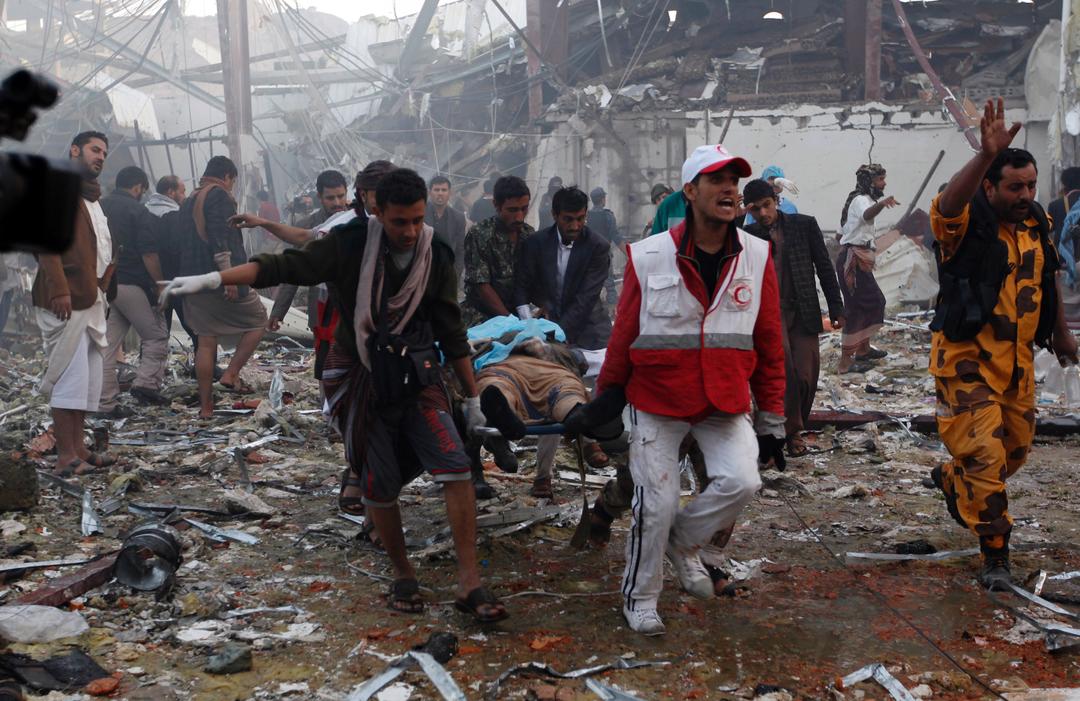
Dødstallet stiger etter at fly fra den Saudi-Arabia-ledede koalisjonen skal ha bombet et stort begravelsesfølge i den jemenittiske hovedstaden Sanaa lørdag.
Minst 140 drept og over 525 skadet da saudiske fly bombet et begravelsesfølge i Jemen. Dødstallene er forventet å stige. Flott alliert vesten har her.
U.S. Navy ship targeted in failed missile attack from Yemen: U.S. [COLOR=#111111][FONT=knowledge-reg]A U.S. Navy guided missile destroyer was targeted on Sunday in a failed missile attack from territory in Yemen controlle...
"The crew of a guided-missile destroyer fired three missiles to defend themselves and another ship after being attacked on Sunday in the Red Sea by two presumed cruise missiles fired by Iran-backed Houthi-forces, USNI News has learned.
[COLOR=#6B6B6B][FONT=Arial]Dur...


 Fokus: Jemen








Kommentér